
Thank you! Your submission has been received!
Oops! Something went wrong while submitting the form.
Zoku teamed up with Prismfly to elevate their e-commerce experience through a streamlined theme transition and a refreshed, mobile-first design system. Through efficient implementation, improved imagery practices, and dynamic product features, the team delivered a faster, more intuitive storefront that outperformed the previous experience across key metrics.
44%
Increase in total sales

15%
Lift in conversion rate
16%
Increase in average order value (AOV)

Zoku is a lifestyle and kitchenware brand focused on modern, sustainable design. They approached Prismfly to refresh their Shopify experience with a mobile-first, accessible, and visually elevated storefront.
The project centered on transitioning to a new theme, improving site performance and usability, upgrading visual clarity, and enabling dynamic product features like color-swatch siblings and conditional bundler visibility.
Delivering all of this under budget was key to meeting the client’s goals.
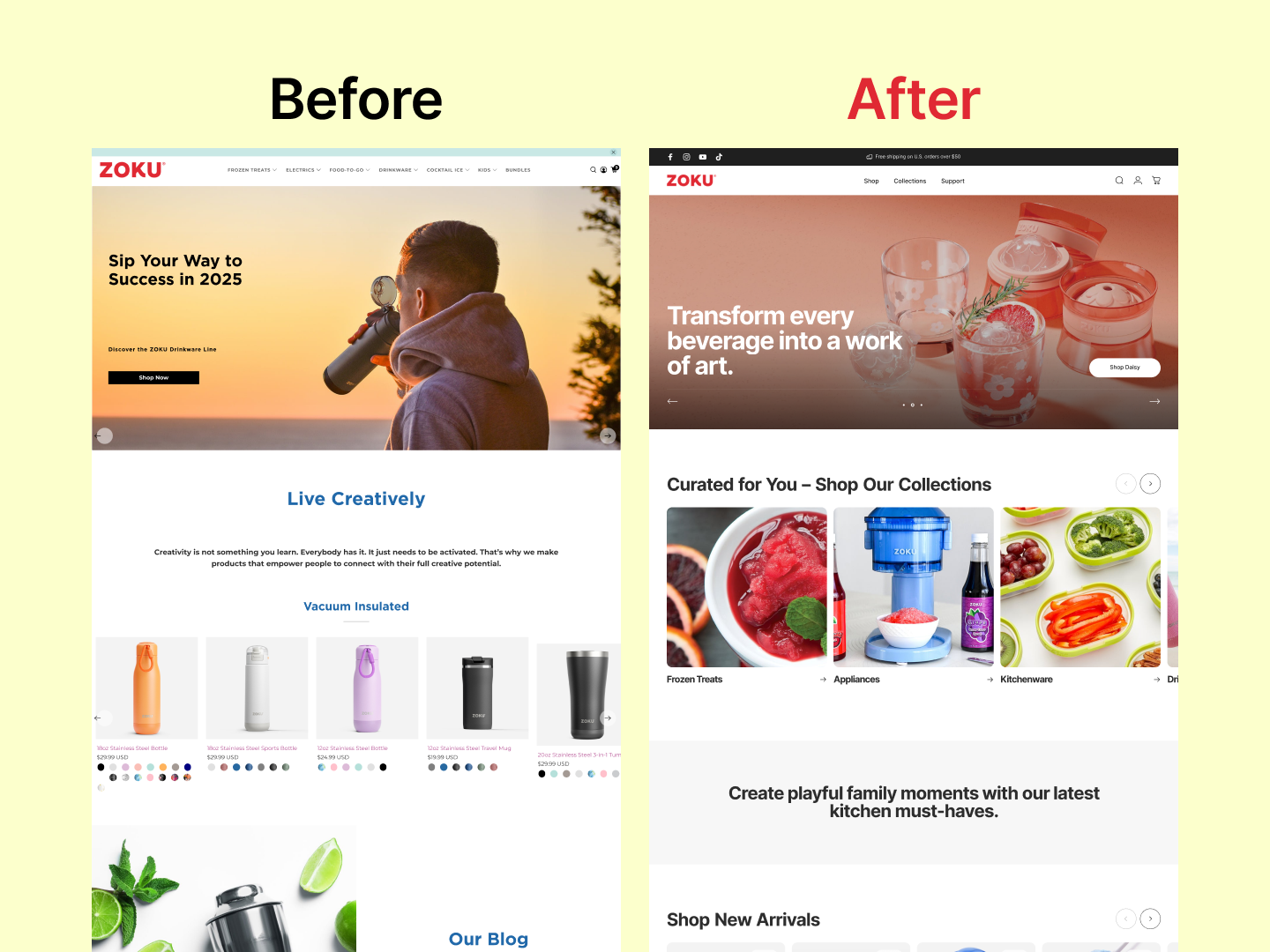
Prismfly began with a theme comparison and competitive audit to determine the best foundation for Zoku’s redesign.
The concept theme was selected for its built-in bundler functionality and flexible layout options, aligning well with Zoku’s product range and visual identity.
The design team applied Zoku’s existing brand system while improving color accessibility, image hierarchy, and mobile responsiveness.
To achieve the desired layout, the team adapted components from multiple theme demos and resolved structural limitations through adjustments in the Shopify Editor.
Metafields were introduced to support dynamic product features, including color-swatch siblings and conditional bundler visibility on PDPs.
Development remained intentionally efficient with minimal code, targeted app integrations, and a streamlined QA process, thus enabling a smooth, under-budget launch with a significantly modernized storefront.
Zoku’s extensive image library made selecting consistent, high-quality photography difficult without compromising visual balance across the site.
There was also a need to ensure navigation across their product categories felt clear and efficient, especially as the catalog expanded. The team approached this by structuring navigation differently across desktop and mobile, optimizing each experience for how users browse on those devices.
The theme’s editor introduced structural limitations that required close coordination between design and development to maintain accuracy while still delivering on the intended layouts.
Post-launch performance showed clear improvements across the funnel.
Conversion rate increased by 15%, average order value rose 16%, and total sales grew 44%, supported in part by a likely spike from larger B2B orders, though conversion and AOV remain the most reliable indicators of sustained improvement.
The new storefront also met Zoku’s accessibility goals through cleaner color contrast and improved visual clarity, driven in part by dialing back the overall color usage. The updated approach leaned into a more minimal palette, reserving color primarily for imagery and key moments, which reduced contrast issues and created a more modern, cohesive experience.
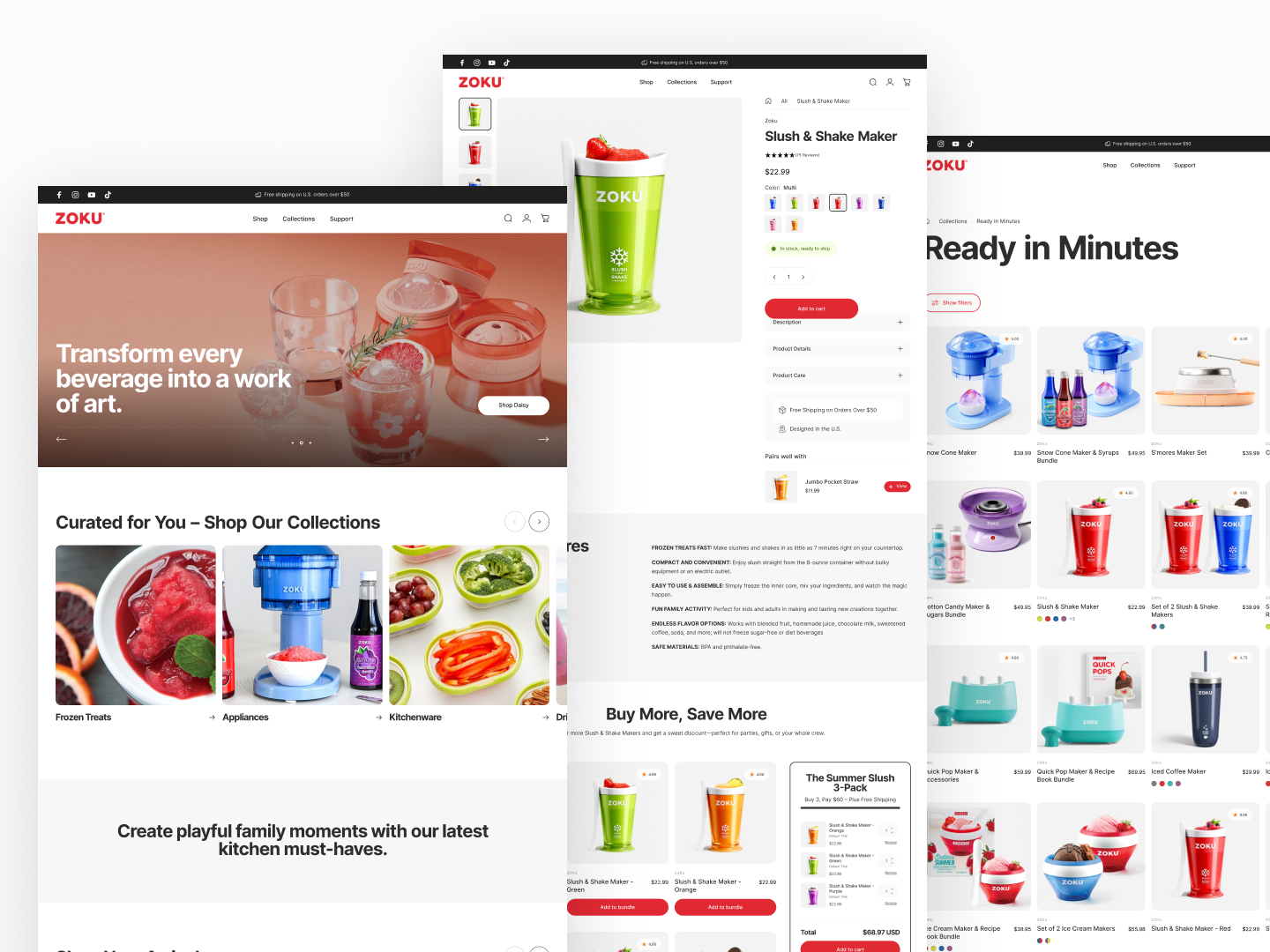
Success came from leveraging a powerful theme foundation and focusing customization on enhancements that truly mattered — accessibility, imagery, and dynamic product logic.
The team’s efficient use of Shopify’s native editor, combined with light custom code and well-structured metafields, enabled a fast, under-budget build that still delivered a meaningful UX and performance upgrade.